With U = Up, and R = Right, you can move in the following ways:
UURR
URUR
URRU
RUUR
RURU
RRUU
??
Puzzle 4
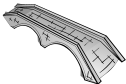
The local River Trent is 4,100 inches wide, which happens to be a fantastic number.
There is a magnificent, perfectly straight, bridge that spans the river at right angles.
During a recent survey of the area, it was found that one-seventh of the overall length of the bridge was on one bank of the river, and one-eighth of the bridge was on the other bank.
What is the total length of the bridge that spans the River Trent?